Granite countertops have become a hallmark of modern kitchen and bathroom design, admired for their sophisticated appearance and durability. If you're contemplating updating your kitchen or bathroom with granite, you're probably wondering, "How much do granite countertops cost?" This article will explore the many factors that contribute to the cost of granite countertops, helping you make an informed decision for your home renovation project.
What Influences Granite Countertop Costs?
Material Quality and Origin
The origin and quality of the granite slab are among the most significant factors affecting the price. Granite sourced from remote locations or rare varieties tend to be more expensive. Common granite types like Ubatuba and Luna Pearl are generally more affordable, while exotic stones like Blue Bahia can significantly increase your budget.
Thickness and Size
The standard thickness for granite countertops is 2-3 cm, though thicker slabs are available. Thicker granite costs more, primarily due to the extra material and the increased complexity of installation. Likewise, larger countertop areas will require more material, thus impacting the overall cost.
Edge and Finish Options
Choosing an elaborate edge style can influence your costs. Standard edges like straight and eased are often included in the base price. However, custom edges, such as waterfall or bullnose, may carry additional charges. The finish also affects the price; polished finishes are common, whereas honed or leathered finishes may add to your bill.
Breakdown of Granite Countertop Costs
Granite Slabs
You can expect granite slabs to cost anywhere from $40 to $200 per square foot, depending on the quality and rarity of the granite you choose. Installation is typically an additional cost.
Labor and Installation
Labor costs for installation usually range from $35 to $85 per hour, depending on your region and the complexity of the job. It's crucial to factor this in alongside the material cost to get a complete picture of your budget.
Thickness
- 2 cm slabs: Usually less expensive, but may require additional supports, influencing overall cost.
- 3 cm slabs: More robust, often preferred for durability and considered standard in many installations.
Cost-Effective Choices
Prefabricated Granite
Prefabricated countertops can be a budget-friendly option. These are mass-produced, ready-to-install granite surfaces that offer convenience and savings. They generally cost less than custom slabs, typically ranging from $20 to $50 per square foot.
Modular Granite
This is a middle ground between prefabricated and custom slabs. Modular granite pieces are larger than tiles but smaller than slabs, allowing for a semi-custom application. They provide an elegant appearance and are more affordable than custom slabs, usually ranging from $25 to $80 per square foot.
Additional Costs to Consider
Sealing and Maintenance
Granite is porous and needs to be sealed regularly to prevent stains. The sealing process can cost between $0.50 and $1.50 per square foot. While some homeowners opt to seal granite themselves, professional sealing offers a more durable application.
Demolition and Removal
Removing existing countertops may add to the project cost. Fees for demolition and disposal can range from $200 to $400, depending on the state and type of material being removed.
Customization and Accents
Custom cut-outs for sinks or unique architectural features like backsplashes and accent tiles can add to the cost. Consider these features when estimating your expenses.
Budgeting Tips for Granite Countertops
- Get multiple quotes: Shop around and obtain several quotes from reputable fabricators and installers. This will give you a better understanding of competitive pricing.
- Consider overstock options: Look for overstocked or discontinued slabs at discounted rates.
- Plan for future needs: Budget for ongoing maintenance, such as sealing, to keep your countertops looking their best.
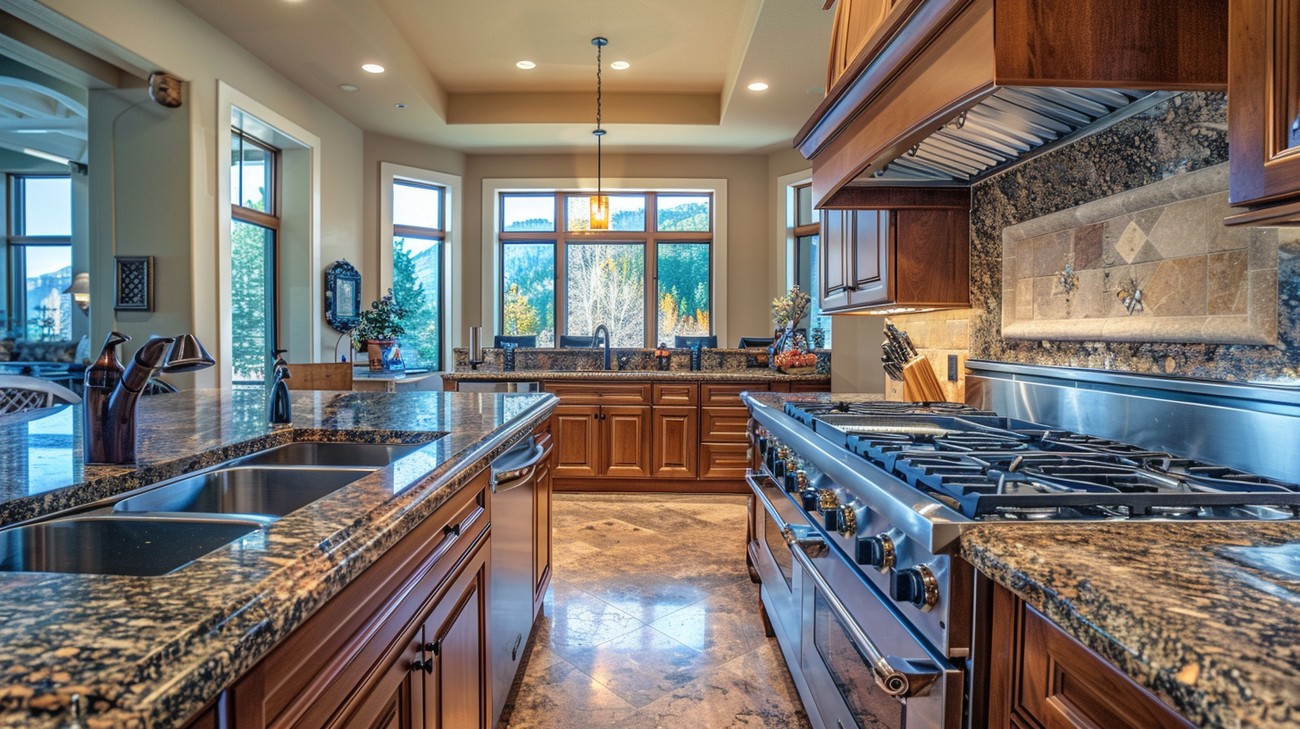
Granite Countertops Cost FAQ
How much do granite countertops typically cost per square foot?
Granite countertops typically range from $40 to $100 per square foot, including installation. The price is mainly determined by the style and rarity of the granite slab chosen. Basic granite typically costs less, while exotic stones, featuring unique patterns and colors, are more expensive. Prices may also vary based on your location, the provider, and the complexity of the installation process. To get the most accurate pricing, it's always a good idea to request quotes from multiple vendors.
What factors influence the cost of granite countertops?
Several factors influence the cost of granite countertops. The quality and color of the granite are major factors, with more unique and rare colors commanding higher prices. Other influences include the size and layout of your kitchen, the amount of countertop space required, and the specific style of edge treatment you select. Additional costs can incur from special cutouts for under-mount sinks or fixtures, as well as the cost of labor for skilled installation. Access to the site and geographic location also play a critical role in the overall cost.
How can I estimate the total cost of installing granite countertops in my kitchen?
To estimate the total cost of installing granite countertops, you should start by measuring your countertop space in square feet. Next, decide on the grade and style of granite you prefer, as prices vary significantly. Include costs for labor, which generally range from $35 to $85 per hour, depending on region and company policy. Don’t forget to budget for additional services like sealant application or specific edge details. Gathering quotes from several installers can help you get a more accurate picture of the expected expenditure.
Are there any additional costs associated with granite countertops?
Yes, several additional costs can be associated with granite countertops. Installation fees themselves can include expenses related to transporting the heavy slabs, which may require special equipment. Additional fees can arise from customizations such as intricate edge styles or sinks, faucet holes, and backsplash treatments. Also, be mindful of the costs for sealing the granite to prevent staining, which can be a necessary part of maintenance. If any old countertops need to be removed and disposed of, these could also add to the overall cost.
Is granite cheaper than other countertop materials?
Granite can be less expensive than high-end materials like marble or quartz but is generally more costly than laminate or solid surface options like Corian. While granite provides a good balance of durability and aesthetic appeal, the choice between granite and other materials will be driven by your budget, style preference, and the intended use of your countertops. Granite offers a range of prices, so it can often be tailored to fit different budgets, though you might find other materials better suited to a more limited cost structure.
How does location affect the cost of granite countertops?
Location significantly affects the cost of granite countertops in terms of both materials and labor. In areas where granite is shipped over long distances, prices may be higher due to increased transportation costs. Additionally, labor rates differ geographically, with urban areas typically incurring higher installation charges than rural ones. Local supply and competition among vendors also play a critical role. As a result, obtaining a few quotes from local suppliers is an effective way to understand the specific pricing dynamics in your area.
Why is the color of the granite a factor in cost?
The color of granite is a factor in cost because some colors and patterns are less common and require more complex quarrying processes. More abundant colors, like basic blacks and browns, tend to be less expensive. Rare colors, such as blues or reds, or those with unique veining, like some types of white granite, can significantly increase the material cost. The rarity of the stone not only boosts the raw material cost but may also drive up installation fees since handling these stones might require more care and precision.
Can I reduce the cost of granite countertops by choosing remnants?
Yes, choosing remnants is a great way to save money on granite countertops. Remnants are the leftover pieces from larger granite slab installations, available at a reduced rate. They are ideal for smaller projects like vanities, islands, or smaller kitchen layouts. Many suppliers offer these remnants at a discount, allowing you to access high-quality materials without the premium price. If your project space can accommodate these smaller pieces, this approach can lead to significant cost savings while still delivering stunning aesthetics.
Does the thickness of granite countertops impact cost?
The thickness of granite countertops does impact cost considerably. Standard granite thickness is approximately 2 centimeters (3/4 inch) or 3 centimeters (1 1/4 inch), with the thicker slabs generally more expensive due to the additional material and increased weight, which complicates installation. Some projects call for even thicker dimensions or laminated edges, increasing costs further due to the extra labor involved. Thinner slabs may be cheaper but often require additional support or seam reinforcements to ensure durability and aesthetic appeal.
How frequently should I reseal granite countertops, and is it costly?
Granite countertops should typically be resealed every 1 to 5 years, depending on usage and the specific stone’s porosity. Resealing is relatively inexpensive compared to the granite countertop’s original installation cost, ranging from $1 to $3 per square foot if you hire a professional, or considerably less if you do it yourself with a quality sealer. Regular sealing ensures your countertops remain resistant to stains and maintain their glossy finish, thereby preserving their appearance and value over the long term.
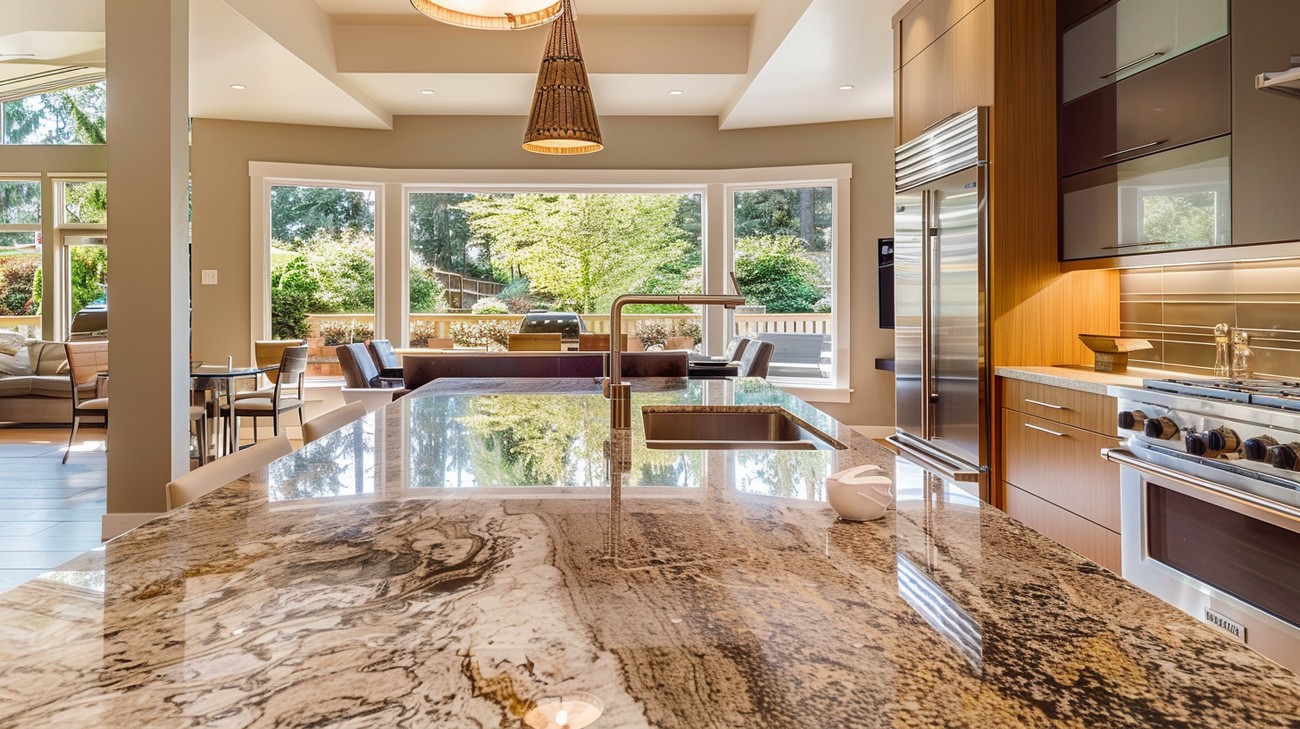
Cost Breakdown
Typical Price Ranges
Granite countertops are a popular choice for many homeowners due to their durability and aesthetic appeal. The cost of these countertops generally ranges from $2,000 to $4,500. This price range includes both materials and professional installation. On average, you can expect to pay between $40 and $100 per square foot, depending on several factors. For those larger spaces, such as a family kitchen, this could mean spending upwards of $3,000 to $4,000.
Factors That Affect Cost
Several factors influence the cost of granite countertops:
Grade and Quality: Granite is available in different grades, which affect the final price. High-end, exotic varieties can cost as much as $200 per square foot, while more common, lower-grade options might be priced at around $40 per square foot.
Slab Size and Thickness: Thicker slabs are more expensive due to the increased material volume and weight. The standard thickness for countertops ranges from 2cm to 3cm.
Color and Pattern: Some colors and patterns are rarer and, therefore, more expensive. Unique patterns or colors that aren’t widely available can push your budget higher.
Edge Styles: Custom edge profiles are a great way to personalize countertops but come with additional costs. Standard edges like eased or straight edges are generally included in the base price, while more decorative edges can add $10-$20 per linear foot.
Geographic Location: Installation costs may vary based on where you live. Urban areas with higher living costs tend to have higher installation fees compared to rural regions.
Installation Complexity: More complex installations, such as curves or large cut-outs for sinks and cooktops, will increase labor costs.
Cost Comparison: Budget vs Premium Options
When exploring options for granite countertops, you'll find a spectrum from budget-friendly to premium selections. Budget-friendly options, typically around $40 to $60 per square foot, often include more common slabs with standard edges and simpler installation requirements. These options are perfect for those looking to spruce up a kitchen or bathroom without breaking the bank.
On the premium end, exotic granites with unique veining and coloring can exceed $100 per square foot. If luxury and distinctiveness are your goals, expect costs to range between $5,000 to potentially $10,000, depending on kitchen size and complexity.
Hidden Costs to Consider
Additional Supports: Especially for large overhangs or unique designs, additional bracing may be required, which isn’t always included in the initial quote.
Sealing and Maintenance: Granite requires periodic sealing to maintain its condition, usually every year. Costs can add up over time, roughly $30 to $50.
Demolition and Disposal: If you're replacing old countertops, don't forget the cost of removing and disposing of previous materials, which could range from $200 to $500.
Transport Fees: Some suppliers charge extra for long-distance delivery or challenging access (think steep driveways or multiple flights of stairs).
Ways to Save Money
By understanding these key components and potential hidden costs, you can better navigate your choices and confidently plan for your granite countertop project.
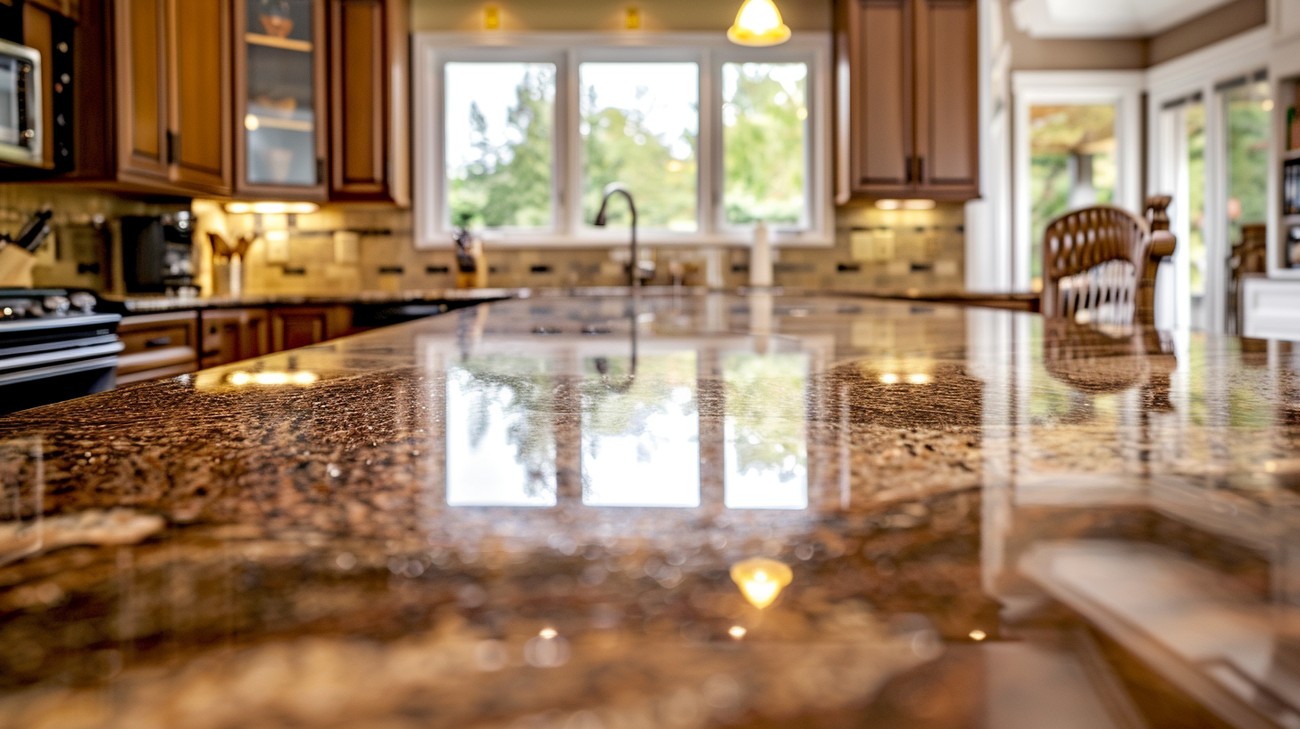
Final Thoughts
When it comes to understanding Granite Countertops Cost, it's essential to consider not just the price per square foot, but also the value they bring to your home. Investing in high-quality granite can elevate your kitchen or bathroom, providing both durability and timeless beauty that stands the test of time. By weighing your options and knowing what to expect, you can make a more informed decision that aligns with your budget and style.
If you're ready to explore stunning granite choices for your space, we invite you to connect with us at GVD Renovations & Remodeling. As your trusted local experts serving homeowners in Northern California, we're here to answer any questions you may have, help you navigate through the variety of options, and provide a free estimate tailored to your project. Let’s make your dream space a reality together!
Reviewed by our team at GVD Renovations, a licensed general contractor. While we strive for accuracy, project specifics vary — contact us for a personalized assessment. Product details, specifications, or warranties may have changed since publication. Brand and product mentions reflect our professional opinion, not endorsements or guarantees.
Tags: kitchen, renovation, pricing,


Written by Sam Rutkevich, Renovation Specialist ·