Key Takeaways
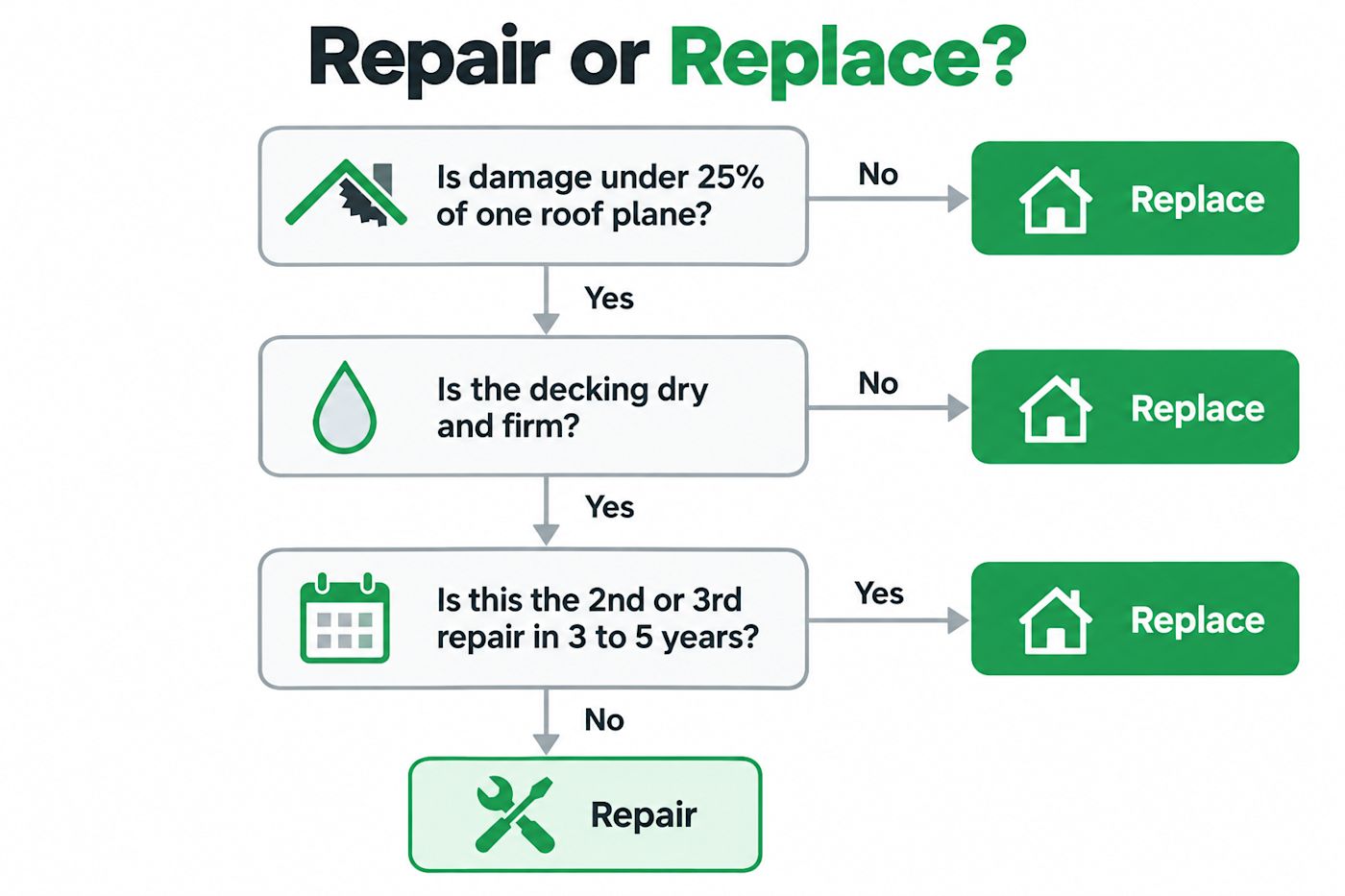
- A roof qualifies for repair when damage covers less than 25% of a single roof plane and the decking underneath is dry; beyond that threshold, many contractors and adjusters treat that plane as a replacement job.
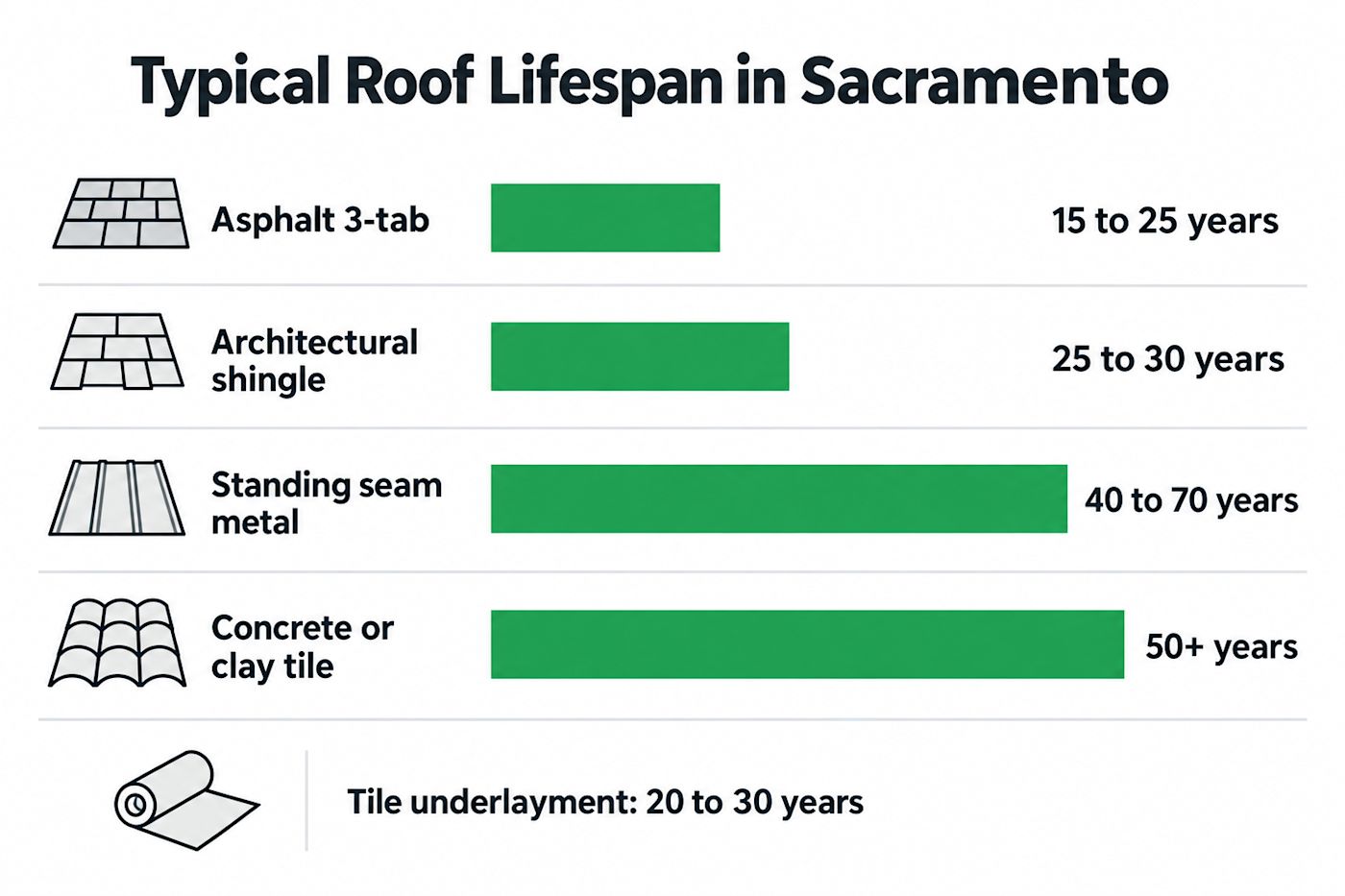
- Asphalt shingle roofs in Sacramento's inland-hot climate run 15 to 25 years before wear becomes systemic, shorter than the 20 to 30 year range quoted for milder climates.
- A roof patch typically costs between $200 and $1,200 and holds for 2 to 5 years, while a full asphalt shingle replacement on a typical Sacramento home runs about $18,000 to $28,000.
- Insurance in California generally pays for sudden storm damage, not gradual wear, and a roof over 20 years old is often settled at actual cash value rather than full replacement cost.
- A full reroof generally requires a permit in Sacramento County and its cities, while a small like-for-like repair often does not; unpermitted work can create disclosure problems when you sell.
Should you repair or replace the roof?
Repair is the right call when the damage is confined to one section of the roof, the decking beneath it is still dry and firm, and the roof has years of expected life left on its material. Replacement is the honest choice when damage spans multiple roof planes, the decking has gone soft from sustained moisture, or the roof has already passed the midpoint of its expected lifespan and is now generating a second or third repair call in a few years. Two factors settle the call faster than anything else: the percentage of the roof surface affected, and the age of the roof relative to its material's expected service life. Everything else, including cosmetics and repair history, is a secondary signal that either supports or contradicts what those two numbers already suggest.
The 25% rule and how roofers actually apply it
The 25% rule is a rule of thumb: once storm or wear damage affects roughly a quarter or more of a single roof plane, many contractors and insurance adjusters treat the plane as a replacement rather than a repair, because matching new shingles to weathered ones at that scale rarely holds up visually or functionally. Older editions of the building code carried a similar 25% repair threshold and some jurisdictions still apply one, but the figure homeowners hear about most often comes from contractor and claim practice rather than a universal code requirement.
In practice, a contractor measures damage per roof slope, not across the whole house, because insurers settle claims slope by slope. A single slope with 10% granule loss from one hailstorm gets patched. A slope with 30% of its shingles cracked, lifted, or missing granules gets replaced. California's claim regulations call for replacement materials that reasonably match, so when matching shingles are no longer made, an adjuster may need to include adjacent slopes.
There is no fixed repair count that triggers replacement, but the pattern itself is the signal worth watching: a roof that needed one repair five years ago and now needs a second in the same season is telling you the underlying shingle field is aging out, not that you had bad luck twice.
Roof age: when 20 years is the line and when it is not
A 20-year-old roof does not automatically need replacement; the honest answer depends on the material and the climate it has weathered. A 20-year-old concrete tile roof with intact underlayment has decades of service life left. A 20-year-old three-tab asphalt shingle roof in an inland-hot climate is usually past its functional life and showing it in curling edges and granule loss across most slopes.
Expected lifespan varies by material: asphalt shingle runs 15 to 25 years, architectural (dimensional) shingle runs 25 to 30 years, wood shake runs 20 to 25 years, concrete and clay tile run 50 years or more, and standing seam metal runs 40 to 70 years. Insurers do not apply a single age cutoff across the state; instead, age interacts with claim payout structure, which the insurance section below covers in detail.
Asphalt shingle: 15 to 25 years in Sacramento heat
Sacramento's inland-hot climate pushes asphalt shingles toward the low end of their rated lifespan because summer roof deck temperatures routinely exceed 150°F, accelerating the loss of the asphalt's oil content and the granules that protect it. A shingle rated for 25 years in a coastal or northern climate can show meaningful curling and granule shedding by year 18 to 20 in the Sacramento Valley, which is why a Sacramento inspection weighs actual granule condition over the manufacturer's rated lifespan.
Concrete and clay tile: 50 years of tile, shorter for underlayment
Tile itself, whether concrete or clay, commonly lasts 50 years or more because the material is inert and does not degrade from UV exposure the way asphalt does. The underlayment beneath the tile, typically a felt or synthetic membrane, is rated for 20 to 30 years and fails long before the tile does. That mismatch means a tile roof "repair" is frequently an underlayment replacement with the existing tile reinstalled, not a full retile, and it is why cost to repair versus replace a tile roof in Sacramento should be scoped against the underlayment's age, not the tile's.
Five signs your roof needs replacement, not another patch
The signs below point toward full replacement rather than a patch when two or more of them show up together on the same roof.
- Granule loss across multiple slopes, visible as bald patches or granules collecting in gutters, which signals the shingle field is aging uniformly rather than failing at one weak point.
- Curling or cupping shingle edges on more than one section, since this shows the asphalt has lost the flexibility needed to seal against wind-driven rain.
- Soft or spongy decking felt underfoot during an inspection walk, which means water has already reached the wood structure and a patch would only cover an active problem.
- Daylight visible through the roof deck from the attic, an unambiguous sign that the roofing system has failed at that location and repair will not restore a weatherproof seal.
- A second or third repair call within 3 to 5 years, because a roof that keeps generating new leak points in different spots is telling you the whole field is wearing out, not that each leak is an isolated incident.
When a repair is the right call
Repair is the correct, cost-effective choice in specific, narrower circumstances than replacement, and a homeowner should expect a contractor to recommend it when the conditions below apply rather than upsell a full tear-off.
- A single flashing failure around a chimney, skylight, or vent, where the field shingles around it are still sound and only the flashing seal has degraded.
- Wind damage limited to a handful of shingles after one storm, where the surrounding shingle field shows no granule loss or curling.
- One isolated leak with dry, firm decking, confirmed by an inspector pulling back shingles at the leak point rather than assuming from the ceiling stain alone.
- A roof under 10 to 12 years old on a 20 to 25 year rated asphalt product, where the rest of the field has no visible wear pattern.
You can patch a roof instead of replacing it in every one of these cases, and doing so is not a compromise; it is the appropriate scope for damage that has not spread beyond its original point of failure.
How long a roof patch lasts and what it should cost
A roof patch on an otherwise sound roof typically holds for 2 to 5 years before the surrounding shingle field catches up in age and starts showing its own wear, at which point the patch stops being the limiting factor. Patch cost runs between $200 and $1,200, depending on whether the fix is a flashing reseal, a section of missing shingles, or a small area of decking replacement underneath.
A patch is a poor investment when the roof around it is already within 3 to 5 years of the end of its rated life, because you would be paying repair labor twice: once now, and again for the full replacement shortly after.
Roof replacement cost in Sacramento by size and material
The table below shows typical installed ranges from roofing projects GVD has completed in the Sacramento area, so you can judge whether a quote you have received is in line for a comparable job.
| Roof size / material | Installed cost range | Expected lifespan |
|---|---|---|
| Asphalt shingle replacement, typical single-family home | $18,000 to $28,000 | 15 to 25 years (architectural 25 to 30) |
| Smaller roof, partial section, or detached structure | $5,000 to $17,000 | Depends on material |
| Large or complex roof (steep pitch, multiple layers) | $28,000 to $45,000 | Depends on material |
| Concrete tile or standing seam metal | Usually above asphalt for the same roof | 50+ years (tile), 40 to 70 years (metal) |
A $30,000 quote is not automatically high; on a large, steep, or multi-layer roof, or one going to tile or standing seam metal, that figure can sit inside the normal range once tear-off, decking repair, and material cost are accounted for. It is high when a like-for-like asphalt shingle quote on a typical single-family roof comes in at that level with no unusual structural work involved, which is the point at which a second quote is worth getting.
Repair cost vs replacement cost: running the break-even
A single repair costs a fraction of a replacement, so the comparison only makes sense as a running total, not a one-time price check. Add up what you have already spent on repairs to this roof over the last 3 to 5 years, then compare that total against the cost of full replacement for your size and material from the table above. Because most roofs that need a second or third repair in that window are already past the point where a fourth is likely, the running total tends to close the gap with replacement cost faster than homeowners expect.
Repeated repair costs more than replacement once the cumulative repair spend crosses roughly a third of the replacement quote, because at that point you have paid for labor mobilization multiple times without buying any additional years of roof life. A single roof replacement resets the shingles, flashing, underlayment, and ventilation together, which a string of patches never does. GVD Renovations provides a free, detailed fixed-price proposal, so you can run that comparison against a firm number.
Will homeowners insurance cover a roof replacement in Sacramento?
California homeowners insurance generally covers roof replacement when the damage results from a sudden, identifiable event such as a hailstorm or wind event, and it generally excludes damage attributed to age, wear, or lack of maintenance. Whether a claim results in full replacement or a partial repair payout depends on how the adjuster documents the scope of the damage against the 25% rule described earlier.
Sudden damage versus wear: what a policy actually pays for
A policy typically pays for storm-caused breakage, such as shingles torn loose by wind or bruised by hail, when the damage is documented with photos and a contractor's inspection report tying it to a specific weather event. It typically excludes granule loss from UV aging, curling from age, or leaks traced to worn flashing sealant, because those are maintenance issues rather than sudden losses.
How age triggers actual cash value instead of full replacement
A roof over 20 years old is often settled at actual cash value rather than replacement cost value, meaning the payout is reduced by depreciation for the roof's age even when the damage itself qualifies as a covered loss. Filing a claim on an older roof does not guarantee coverage will decline, but it does mean the payout is worth confirming against your policy's replacement cost endorsement, if you have one, before you count on a full-replacement settlement.
Replacing a roof before it is storm-damaged can lower a homeowner's premium, since insurers price roof age and material into wind and hail risk, though the size of that reduction is carrier-specific.
Filing a Sacramento roof insurance claim step by step
Filing a claim in the right order protects the payout and avoids the most common way homeowners talk themselves out of a fair settlement.
- Document the damage yourself first, with dated photos from the ground and, where safe, from a ladder, before any contractor touches the roof.
- Get an independent contractor inspection report that states the cause and extent of the damage in writing, because this report is what you compare against the adjuster's findings.
- File the claim with your carrier and request the adjuster's inspection be scheduled with your contractor present.
- Walk the roof with the adjuster if possible, since discrepancies in scope are far easier to resolve on the roof than by phone afterward.
- Compare the adjuster's estimate against your contractor's report line by line before signing off, and challenge any slope the adjuster marked as repairable if your contractor's photos show it crosses the 25% threshold.
When talking to the adjuster, avoid speculating about cause, avoid agreeing to a repair-only scope on the spot, and avoid volunteering that you had noticed "some wear" before the storm, since that phrase can be used to argue the damage was pre-existing rather than storm-caused.
Sacramento County roofing permits and code
A full reroof in Sacramento County generally requires a building permit, because the work involves removing and replacing the weatherproofing layer of the structure. A like-for-like patch or small repair, such as resealing flashing or replacing a handful of shingles, does not always require one; whether a permit is needed depends on the scope of the specific job, and a licensed contractor confirms that against county code before starting work.
Sacramento County's code adopts the California Building Code's requirements for roof covering, which include wind uplift resistance ratings appropriate to the region and, for homes in wildland-urban interface zones on the county's eastern edge, Class A fire-rated roofing assemblies under California's Chapter 7A requirements. Where a permit is required, GVD Renovations handles the permitting process directly with the county rather than leaving it to the homeowner.
Tile versus shingle: the Sacramento material decision
Sacramento's inland-hot climate, with repeated triple-digit summer days and sharp day-night temperature swings, puts more thermal cycling stress on roofing material than a coastal or mountain climate does, which is the deciding factor in choosing between tile, metal, and shingle for a full replacement. Concrete and clay tile handle that cycling well because the material is inert and does not degrade from UV the way asphalt does, but the underlayment beneath tile still needs replacement on its own 20 to 30 year cycle, as covered above. Standing seam metal reflects a significant share of solar heat and holds up to thermal cycling with minimal expansion-related failure when installed with proper fastener clips, making it a reasonable alternative to tile on homes where roof weight is a structural concern tile cannot meet.
Cost to repair versus replace a tile roof in Sacramento comes down to the underlayment question: if the tile itself is intact and only the underlayment has failed, replacement of the underlayment with the existing tile reinstalled costs a fraction of a full retile, and it is the scope a contractor should recommend by default rather than defaulting to new tile.
How to get an honest roof inspection quote in Sacramento
Get quotes from at least two independent inspections before committing to either repair or replacement, because scope disagreements between contractors are common and cheap to catch before signing anything. Ask each contractor to walk the roof with you and point out the specific slopes and defects driving their recommendation, rather than accepting a verbal summary alone. A contractor who will not get on the roof, or who quotes a full replacement without inspecting the decking from the attic side, has skipped the step that actually determines repair versus replace.
Red flags worth walking away from include a quote with no documented scope of work, pressure to sign the same day a storm hits your neighborhood, and a price that arrives without the contractor having climbed onto the roof at all. GVD Renovations inspects the roof during a free in-home assessment and recommends repair or full replacement based on substrate condition rather than defaulting to the bigger job, and provides a free, detailed fixed-price proposal before any work starts.
Get a Sacramento roof assessment and a firm price
If your roof is showing granule loss on more than one slope, a soft spot in the decking, or a second repair call in the last few years, the next step is a physical inspection, not another guess from the ground. GVD Renovations holds California contractor license number 989637, carries full liability and workers' compensation insurance, and runs every job with a dedicated project manager and one accountable team. It holds a 4.9/5 rating across 921+ reviews and an A+ BBB rating. GVD offers a free in-home consultation across the Sacramento Metro area to assess whether your roof needs a repair or a full replacement, and provides a detailed fixed-price proposal before any work begins.
Reviewed by our team at GVD Renovations, a licensed general contractor. While we strive for accuracy, project specifics vary — contact us for a personalized assessment. Product details, specifications, or warranties may have changed since publication. Brand and product mentions reflect our professional opinion, not endorsements or guarantees.
Tags: roof repair, roof replacement, 25% rule, roof insurance claim, sacramento,
Written by Paul Kho